Tübingen Researchers: Carrion Crows Make Visual Decisions Twice as Fast as Monkeys
A new study shows that crows use the same mathematical logic as primates for decision-making, but reach conclusions in half the time despite lacking a neocortex.
By Sergio Morris ·
Carrion crows reach visual decisions in half the time it takes monkeys, according to a new study from the University of Tübingen. The finding challenges long-held assumptions about how different brain structures handle complex information processing.
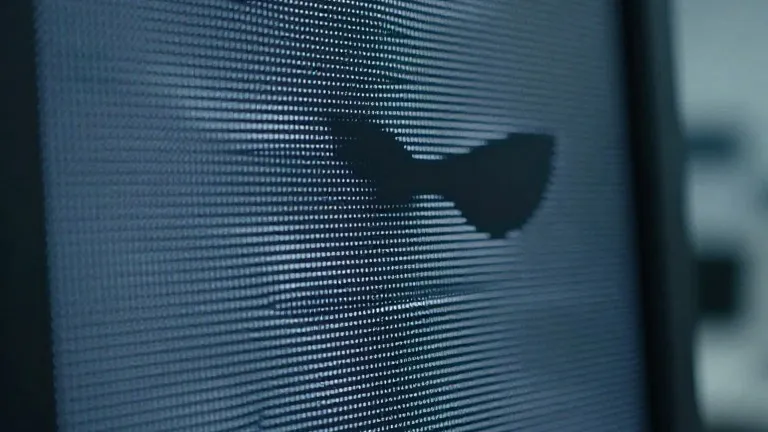
The research team led by neurobiologist Andreas Nieder and colleague Philipp Schmidbauer tested two hand-raised carrion crows using a standard visual task. The birds sat before a touch-sensitive monitor displaying white dots on a black background. Some of the dots drifted together in a specific direction, while others moved randomly. The crows indicated their perception of the direction by pecking one of the targets on either side of the display. A correct response earned the bird a mealworm.
This experimental setup, known as the random-dot-motion task, is widely used in primate research to understand how the neocortex accumulates evidence. In monkeys, neurons in the neocortex fire at increasing rates as they gather visual data. Once the firing rate crosses a specific threshold, the animal commits to a choice. Birds do not possess a neocortex, which led researchers to question how avian brains encode similar decisions.
"This was the big question," Nieder said. "How [would] a differently organized avian brain encode decisions?" The researchers designed the experiment to be as identical as possible to the standard monkey version. "We intentionally wanted to have exactly the same random-dot motion task," Nieder noted. The only mechanical difference was the method of response, with crows using pecks instead of the eye movements typical in monkey studies.
The team varied the difficulty of the task by adjusting the percentage of dots moving coherently. At the easiest level, 81 percent of the dots moved together, making the direction obvious. At the hardest level, only 3 percent moved coherently, a signal barely distinguishable from random noise. The experiment also included a condition where 0 percent of the dots moved coherently, meaning there was no correct answer.
The data showed that the crows processed the visual ambiguity using the same mathematical logic as primates. However, the birds completed the task at twice the speed of the monkeys. The results suggest that the absence of a neocortex does not prevent the brain from arriving at comparable decisions through a similar evidence-accumulation process.
Source: Ars Technica