Austin buses now run 22 hours with new overhead chargers
New park-and-ride facilities allow electric buses to charge on route, extending daily service from eight to twenty-two hours.
By Sergio Morris ·
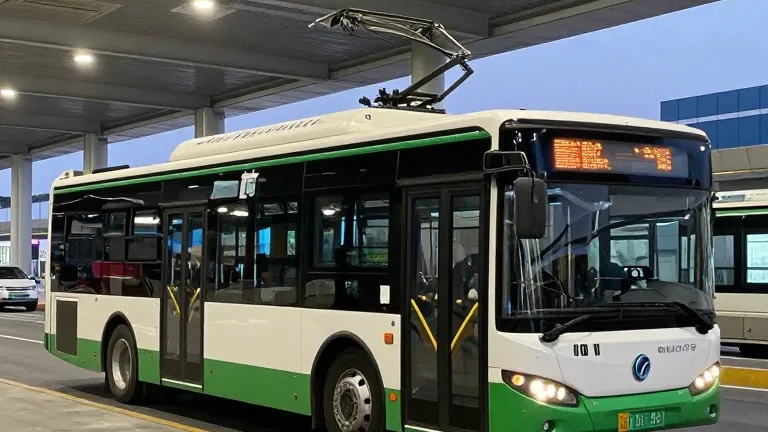
Twenty-two hours is the new maximum shift length for Austin electric buses, a leap from the eight-hour limit that constrained previous operations. CapMetro activated two new park-and-ride terminals on October 23 to support this expansion. The facilities, located at Goodnight Ranch and Expo Center, serve as the endpoints for the Rapid 800 and Rapid 837 lines.
The transit agency electrified these two routes and installed overhead pantograph chargers at the terminals. This infrastructure allows vehicles to replenish their batteries at the end of each run. Buses can then make the return trip without range concerns. The upgrades were first announced in June and are now fully operational.
Andy Skabowski, CapMetro's Chief Operations Officer and Executive Vice President, attributed the extended service hours to the on-route charging method. He stated that every time the pantograph drops, the bus charges. This process makes 10 to 15 minute service intervals possible. Without the new terminals, a typical bus would have held only eight hours of charging.
The charging network extends from CapMetro's main bus depot to the two new terminals. Infrastructure partner Camber Charging supplied two 1,440 kW systems at the depot. These systems connect to 48 industrial dispensers. The depot now has a total charging capacity of 2.9 MW. The setup is designed to charge 48 electric buses simultaneously during overnight hours.
The fleet consists of Xcelsior battery-electric transit vehicles built by Canadian manufacturer New Flyer. The buses deliver up to 320 all-electric horsepower with full torque at 0 rpm. While CapMetro did not release specific battery data for this fleet, New Flyer states the platform offers up to 660 kWh of available capacity.
Camber Charging manages preventive maintenance and remote diagnostics across all three locations. The company also provides charger and energy management software. The new terminals include improved passenger amenities alongside the charging equipment.
The Rapid 800 and Rapid 837 lines are the first to benefit from this expanded charging network. The agency aims to support a growing fleet of electric buses with this infrastructure.
Source: Electrek