Baltimore County Voters Decide $392 Million Debt and New Leadership
Residents face 14 ballot measures, an expanded council, and a leadership transition in Tuesday's election.
By Pavel Bell ·
Baltimore County residents will determine the county's future debt load and top leadership when they cast ballots on Tuesday, Nov. 3. The election features 14 distinct ballot questions that collectively authorize $391.75 million in borrowing. This financial package includes funds for school construction, public facilities, and infrastructure repairs. Simultaneously, voters will select a new county executive and an expanded nine-member County Council.
The path to this election has involved a restructuring of local government and a period of administrative transition. In 2025, County Executive Kathy Klausmeier attempted to replace Inspector General Kelly Madigan. Madigan's office had investigated former County Executive Johnny Olszewski, Councilman Julian Jones, and former Councilwoman Cathy Bevins. The council resisted the change, and Madigan departed. The proposed replacement resided in Fredericksburg, Virginia, and the county has lacked an inspector general since January.
The leadership vacuum is part of a wider shift. The County Council is expanding from seven to nine members. Advocates note that the current body is entirely male and anticipate that at least six newcomers will bring greater diversity. Voters will also elect a new state’s attorney. Democrat Sarah David, who defeated incumbent Scott Shellenberger in the primary, is unopposed. Her election will mark the first new top prosecutor in the county in 20 years.
The executive race pits Democratic Councilman Julian Jones against Republican businessman Patrick Dyer. If Jones wins, he will become the county’s first Black county executive. Dyer has campaigned on making Towson safer. Both candidates are vying to succeed Klausmeier, whose term concludes after this election.
Ballot Question C addresses the selection process for the inspector general. Currently, the county executive nominates the candidate, and the council confirms the appointment. The amendment would transfer this authority to a seven-member board. It would also require the inspector general to reside in the Baltimore-Columbia-Towson metropolitan area. Councilman Izzy Patoka, who proposed the change, stated he wanted to take politics out of the selection. The council voted unanimously to place the measure on the ballot, and no committees have registered to campaign for or against it.
Questions A and B focus on land use and agriculture. The Urban-Rural Demarcation Line, established in 1967 and last updated in 2012, separates developed zones from rural areas with stricter building limits. Question A would require six of nine council votes to move this line, up from a simple majority. Council Chairman Mike Ertel told WYPR that it is good for the public to reexamine the line. Councilman David Marks proposed the measure, which passed the council 5-2. Jones voted against it, arguing that residents inside the line subsidize rural areas.
Question B proposes a stand-alone Department of Agriculture. Former Councilman Wade Kach has pushed for this idea, and Maryland Agriculture Secretary Kevin Atticks supports it. County officials estimate the new department would cost $500,000 annually to establish. They argue the step is unnecessary because an agriculture division already exists within the Department of Economic Development. Federal data from 2022 lists 783 farms in the county and a $93 million agriculture business.
The bond questions authorize borrowing for specific categories. Question J allows $200 million for school construction, which represents more than half of the total debt. Question N authorizes $81.75 million for public buildings, including police and fire stations, libraries, and senior centers. Question H permits $54.38 million for roads, bridges, storm drains, and sewers. The ballot text authorizes borrowing for these broad categories but does not list individual projects.
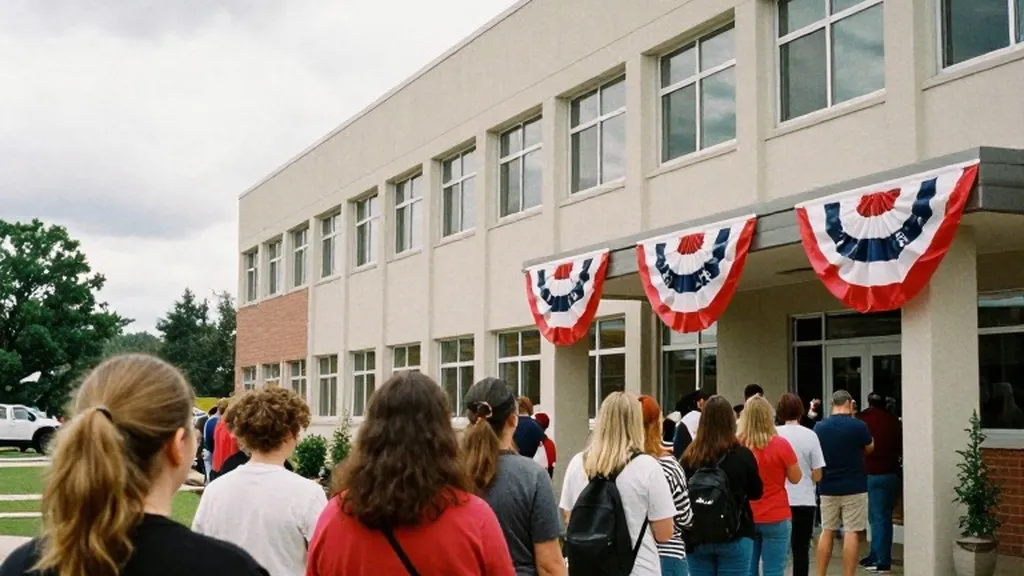
Polls will open at 7 a.m. and close at 8 p.m. on Tuesday. Mail-in ballots must be placed in a drop box or postmarked by 8 p.m. Nearly 79,000 county residents have already voted early, a subset of more than 600,000 statewide early voters.
Source: Baltimore Chronicle