Warhound raises $200M to engineer war dogs and arm them with Anduril gear
Warhound has raised $200 million to engineer war dogs and arm them with Anduril gear.
By Hugo Khalil ·
Warhound, a company backed by $200 million in funding from investors including Sequoia, 8VC, Corner Ventures, and In-Q-Tel, has launched with the goal of genetically engineering war dogs for the U.S. military, law enforcement, and other emergency response teams. The round values the company at $1.2 billion.
The company plans to engineer dogs with characteristics suited to demanding missions, such as bomb detection, searches, and other specialized operations. The hope is that Colossal can use its technology to engineer dogs with characteristics suited to demanding missions.
Ben Lamm and Palmer Luckey had an idea to genetically engineer war dogs for the U.S. military, law enforcement, and other emergency response teams. On Thursday, that idea came out of stealth as Warhound, backed by $200 million in funding from investors including Sequoia, 8VC, Corner Ventures, and In-Q-Tel, a venture firm backed by the CIA and other U.S. intelligence agencies.
The round values the company at $1.2 billion.
The company plans to engineer dogs with characteristics suited to demanding missions, such as bomb detection, searches, and other specialized operations.
The hope is that Colossal can use its technology to engineer dogs with characteristics suited to demanding missions.
Lamm told TechCrunch he met Luckey about a year ago at a conference, where Luckey said more should be done for the military’s working dogs. The two kept in touch, and Lamm researched how working dogs are bred.
He learned that many of them do not make it through training because of inherited predispositions to problems like poor eyesight or the high possibilities of cancer, hip dysplasia, or muscle atrophy.
Lamm believed dogs could be enhanced for health, longevity, and “for things like speed and agility or enhance olfactory sensors for bomb sniffing and whatnot,” he said.
His team studied top-performing working dog breeds, the Belgian Malinois and German Shepherd, taking cell lines (living cells grown in a lab) from them and putting them in a biobank.
From there, the team will edit the dogs’ genes, adding ones that will improve performance and removing ones that will not, to create “a new type of dog.”
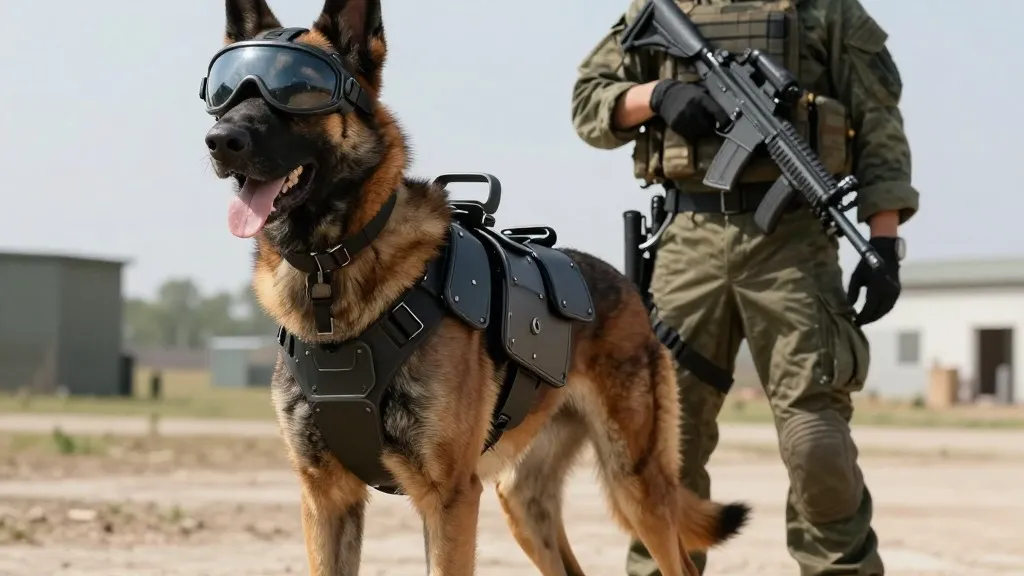
Anduril, meanwhile, will provide software and hardware, such as protection vests and goggles, to assist the dogs and their handlers with situational awareness and coordination.
Lamm said to imagine, for example, bulletproof vests with data sensors that send information back to the handlers so they can better understand what is happening.
The idea is, if we make the dog safer, make it healthier, make it perform better, it’s going to perform better in the line of duty.” Lamm said he added that Anduril’s additions will make the dogs safer and healthier beyond their genetics, “on top of the dog, not in the dog.”
He believes the enhancements will also better protect the dogs’ human handlers.
Luckey is a partner in the venture but owns no equity in it, Lamm told TechCrunch. Colossal owns equity in the business and supports it by licensing its technology.
Colossal is currently known for its de-extinction efforts to bring back animals like the dodo and the mammoth.
As Lamm previously told TechCrunch, the company has been using AI, buying and building technology to help with gene cloning and with identifying and copying animal genes.
Lamm said the first batch of dogs is about to be cloned and incubated, with births expected early next year and service ideally beginning within two years.
Viagen, another Colossal-owned company, will partner with Warhound to clone the dogs.
Lamm said Viagen’s technology has a high cloning success rate, and Colossal already uses it in its program to protect endangered species.
Warhound doesn’t know yet how much it will charge for the dogs, but it expects to sell to first responders, the Department of Defense, military service groups, and police forces.
Asked about government approval, Lamm said the company has briefed many government groups about the business.
Asked about civilian safety once genetically enhanced dogs enter service, Lamm said each dog will be trained like any military working dog and managed by whoever buys it.
The company said it is working under the guidance of the American Humane Society to help certify Warhound’s training program for the new dogs.
The hope is also that when these new military dogs retire, they will enter the Society’s Military Working Dog Reunification Program, which provides homes for retired military dogs, or another program the Society offers to help dogs.
When reached for comment, the American Humane Society said, “We applaud Warhound and Colossal for inviting the country’s first national humane organization, which is grounded in science and ethics, to have a seat at the table. We look forward to working with them to help ensure the animals in their care are treated humanely.”
This piece was updated to add Corner Ventures as an investor and to add the statement from the American Humane Society.
Source: TechCrunch · original report published
More Business · Bad Service · Report a business · Got a Story?