66% of Lebanese Shi'ites Back State Control of Hezbollah Weapons
A recent poll indicates a significant shift in public opinion within Hezbollah's traditional support base regarding the group's military arsenal.
By Pavel Bell ·
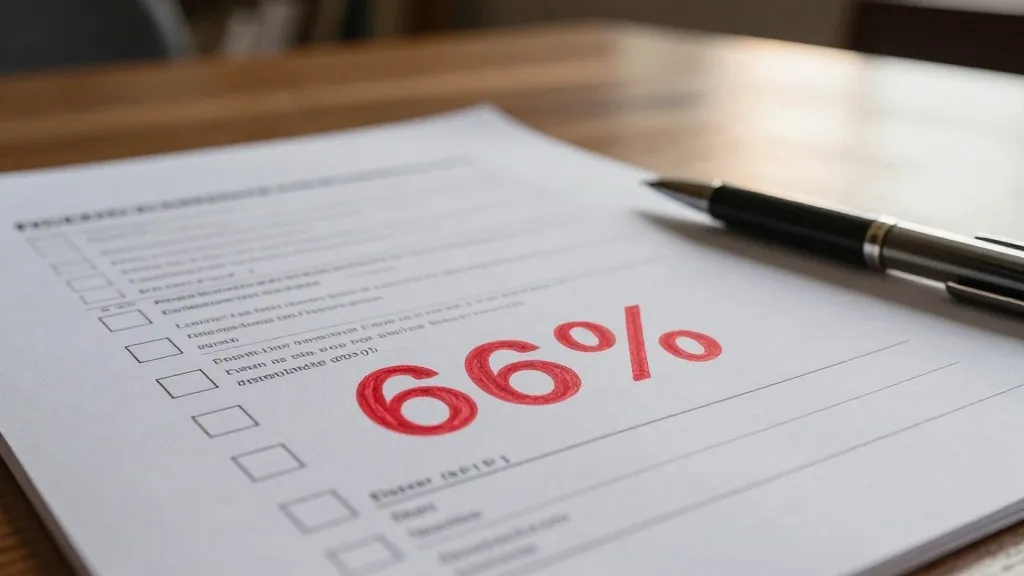
A recent survey has highlighted a notable shift in sentiment among Lebanese Shi'ites, suggesting that many within the community are rethinking their stance on Hezbollah's military power. The data, which emerged in mid-October, indicates that a majority of respondents now favor handing the group's weapons over to the Lebanese state rather than keeping them under Hezbollah's command. This finding has drawn significant attention from regional media, including Israel's public broadcaster KAN and the Lebanese website Kataeb.org, which reported on the results. The core of the tension lies in whether the community that has long formed the backbone of Hezbollah's support is beginning to question the group's hold on the nation's security apparatus.
The poll was conducted in September by Statistics Lebanon and involved 800 Lebanese Shi'ites. The primary question asked about the future of Hezbollah's arsenal. The results showed that 66.4% of those surveyed supported transferring control of the weapons to the state. In contrast, 29.6% believed the group should retain its weapons. Hezbollah has historically maintained that its arsenal is a critical component of Lebanon's defense strategy against Israel, making this preference for state control a significant departure from the group's traditional arguments.
Kataeb.org, which is affiliated with the Christian Kataeb Party that opposes Hezbollah, provided additional details from the survey. The data revealed that 71.1% of respondents believed that decisions regarding war and peace should be made exclusively by the Lebanese state. A small minority, only 5.9%, indicated that Hezbollah's leadership should have an expanded role in determining the country's future direction. This suggests a growing desire within the community to centralize strategic decision-making in national institutions rather than in the hands of a single political party.
Trust in the Lebanese Armed Forces appears to be strong among the respondents. Approximately 78.5% said they trusted the army, and 51.1% identified it as the institution best equipped to ensure long-term security. By comparison, only 16.5% selected Hezbollah for that role. These figures challenge Hezbollah's long-standing claim that it is the primary guardian of the security interests of Lebanon's Shi'ite population. The data implies that many in the community now view the national army as a more reliable guarantor of safety than the militia.
Despite the support for state control, the overall picture remains complex. The survey found that 67.4% of respondents felt that Hezbollah had either failed to achieve its goals in the war with Israel or had only partially succeeded. Additionally, 42.1% expressed disappointment, anger, or concern regarding the group's leadership and the aftermath of the conflict. However, a majority still maintained some level of trust in the organization. Specifically, 59.5% reported having some trust in Hezbollah, with 37.1% indicating a high degree of trust. Roi Kais from KAN noted that the support networks and status Hezbollah has provided to the sect continue to underpin its strength, provided no other entity fills the void left by the state.
The current findings stand in sharp contrast to earlier data. In an analysis published on June 10 for Israel's Institute for National Security Studies, researchers Orna Mizrahi and Moran Levanoni referenced a May 2026 survey by Lebanon's Information International. That previous poll showed that 87.5% of Shi'ite respondents opposed disarming Hezbollah, with only 7.9% supporting the transfer of weapons to the state. Furthermore, more than 90% of those surveyed in the May poll opposed ties with Israel. The significant difference in results has raised questions about whether variations in question wording or the specific agenda of the surveys influenced the outcomes.
Mizrahi and Levanoni argued that Hezbollah's influence is rooted in its extensive social and economic networks, its political power, and the historical marginalization of Lebanon's Shi'ites. They also pointed out that intimidation has often discouraged dissent within the community. In their assessment, weakening the group would require a stronger Lebanese army, along with financial support from Western and Gulf nations, to allow the state to replace the services currently provided by Hezbollah.
KAN also highlighted signs of local wariness regarding the group's presence. In the southern city of Tyre, property owners reportedly resisted the opening of a branch of Al-Qard Al-Hassan, a financial institution linked to Hezbollah. Their fear was that the branch could become a target in an Israeli strike, a risk that has materialized in the past. Meanwhile, Hezbollah has announced aid packages for families affected by the conflict. Eligible families in Beirut and its southern suburbs whose primary homes were destroyed can receive up to $14,000, while those in other areas can receive up to $12,000.
Hezbollah has endured significant military and leadership losses in recent years, including the killing of Hassan Nasrallah in September 2024. A new war erupted in March 2026, causing heavy destruction in villages across southern Lebanon. Whether the discontent revealed in this latest survey translates into political change may depend on the Lebanese state's ability to provide security, reconstruction, and economic opportunities for its citizens.
Source: The Jerusalem Post