French police detain 980 as night clashes follow mass cost-of-living marches
Interior Minister Laurent Nuñez says two protesters were seriously injured in Toulouse and Clermont-Ferrand amid the second wave of demonstrations.
By Hugo Khalil ·
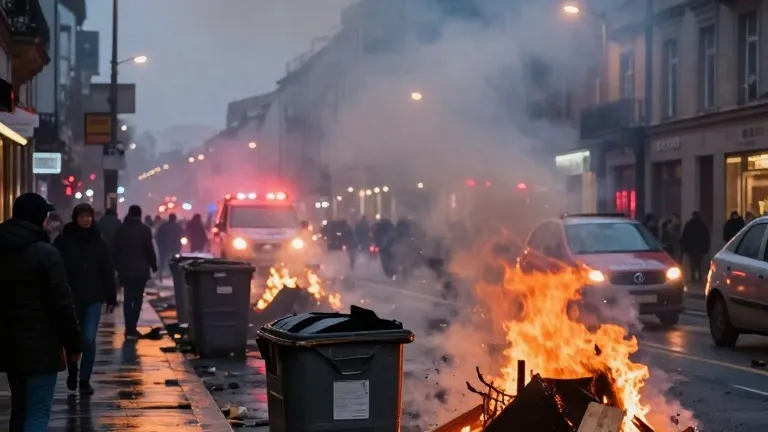
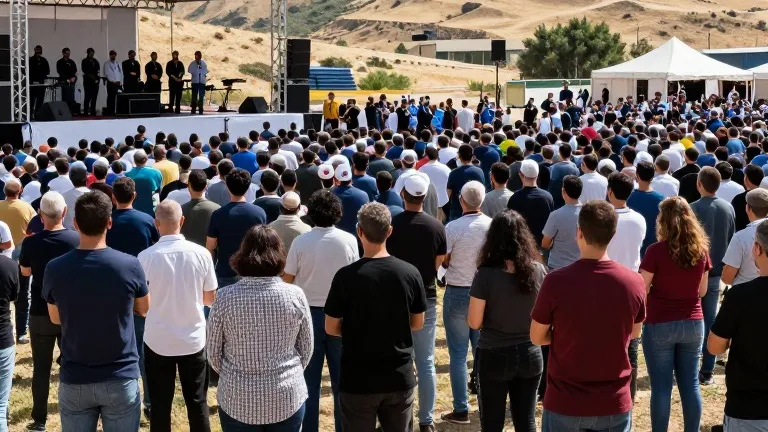
Saturday marked the second consecutive weekend of nationwide unrest in France, a period defined by shifting public patience regarding household budgets. The day began with orderly crowds moving through major cities but ended with police deploying tear gas and water cannons to break up gatherings that had turned violent in the evening hours.
Interior Minister Laurent Nuñez announced late in the day that 980 people had been arrested across the country. He noted that the final count would likely increase as processing continued. Nuñez also reported that two protesters sustained serious injuries, one in Toulouse and the other in Clermont-Ferrand.
The interior ministry estimated that 410,000 people took to the streets. Unions countered with a figure closer to 800,000 participants. To manage the crowds, authorities deployed approximately 70,000 police officers and imposed travel restrictions in several urban centers. This heavy presence aimed to prevent a repeat of the disorder seen the previous weekend, which involved widespread looting and arson.
In Paris, the atmosphere shifted from calm to chaotic as a march from Porte d'Italie reached Porte de Vincennes. Police used an elite unit typically reserved for counter-terrorism and organized crime. Some protesters constructed makeshift barriers and threw objects at officers. Police responded by charging with batons at groups of masked youths who were smashing windows at a car dealership.
Violence also flared in other regional hubs. In Marseille, protesters set fire to barricades and rubbish bins while using metal sheets to block streets. In Bordeaux, onlookers saw individuals tearing boards off a shop facade. In Lyon, police fired tear gas into a crowd that had gathered in an area declared off-limits by the local prefecture. One student protester described the visibility as poor, noting the crowd numbered around 150 people.
The demonstrations stemmed from deep frustration over the cost of living and deteriorating school conditions. President Emmanuel Macron had earlier decreed that only trade unions could organize public marches. Following fast-track court hearings, hundreds of individuals have already been jailed for vandalism, arson, and looting. The government sought to balance the right to protest with a need to control the spread of damage to businesses.
Protesters expressed a sense of abandonment from the state. Zelie, a 26-year-old participant in Paris, told the BBC that people were suffering and that the situation had become too much. Two masked teenagers stated that their generation felt neglected. One admitted that looting was not ideal but blamed poverty and police violence for the escalation. They said the protests would only end when their demands were met.
The unrest extended beyond French borders. In Tirana, Albania, riot police fired tear gas at thousands of anti-government demonstrators. Clashes were also reported in Brussels. In Milan, hundreds of soldiers and police blocked gathering points to prevent a repeat of the previous week's violence. These international reactions underscored the ripple effect of the European cost-of-living crisis.
The previous weekend saw approximately 550,000 people protest rising fuel prices and living costs. That event resulted in more than 2,500 arrests and direct damage to over 2,000 shops and businesses. The Chambers of Commerce and Industry estimated the financial damage in the hundreds of millions of euros. Roughly 1,000 police officers were injured, and one demonstrator lost a hand to a crowd-control grenade. With presidential elections six months away, top candidates have begun blaming Macron and his cabinet for the instability.
Source: BBC News