Bulk Team Orders Lose Money When Sizing Guesses Go Wrong
Printers report that 74% of adult team shirts fall into three sizes, yet uneven distribution and shrinkage errors still ruin many orders.
By Pavel Bell ·
Teams buying custom apparel face a financial trap: once a shirt is printed, a sizing error cannot be fixed. Vendors report that most bulk order problems stem from four repeatable mistakes that leave groups with unusable inventory. Avoiding these errors requires specific data collection and garment testing before production begins.
The first error involves splitting orders evenly across all sizes. This approach ignores the natural distribution of body types. Adult groups typically order large, medium, and extra-large sizes, which account for roughly 74% of total units. Small and double-extra-large follow, while triple-extra-large remains rare. Women’s teams skew toward small and medium, while pre-teen groups require about 11% of the order in youth sizes. Collecting actual player measurements is more reliable than guessing, though it requires time to gather.
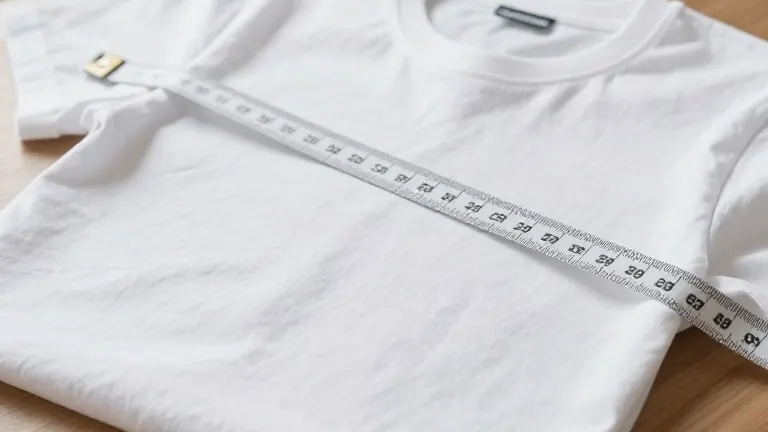
The second mistake is trusting size labels without checking garment dimensions. Branding varies, and cuts differ. A women’s medium fits like a unisex small, while semi-fitted styles run smaller than classic tees. A player who wears a large in a standard cut may need an extra-large in a fitted style. Measuring a well-fitting shirt flat across the chest, one inch below the armhole, provides a baseline. However, garments vary by up to an inch, so charts are only guides. Mixing different blank styles in a single order increases the risk of inconsistency between shirts marked with the same size.
Cotton shrinkage creates the third category of error. A preshrunk 100% cotton tee can lose 2% to 5% in length and 1% to 3% in width after washing. On a large shirt, this equates to an inch or two of lost fit. Hot water and dryers accelerate this process. Polyester blends retain their shape better. Teams that wash frequently should order a size up in cotton or select a blend. Printing shops can test wash a sample blank in one day to verify shrinkage rates before the full order starts.
The final error is using one print size for all garments. Artwork sized for a medium looks too small on a 3XL and too large on a youth small. Printers scale artwork based on garment size. A chest print might be 10 inches wide on a women’s small and 12 inches on a men’s large. Left-chest logos are typically 3.5 inches wide, while heart-placement prints are closer to 3 inches. Front-center placement usually sits 2.5 to 3.5 inches below the collar seam. Shops often scale art in groups at no extra charge once files are set up.
Approving proofs for the smallest and largest sizes in an order reveals placement issues that middle sizes may hide. Players should send a size sheet that specifies brand and cut. Printers review hundreds of orders annually and can spot anomalies, such as a team of 20 listing nine small shirts. Ordering 5% to 10% extra in medium and large sizes covers late changes and shrinkage surprises. Extra units in extreme sizes are rarely used.
The process relies on accurate data and vendor communication. A size sheet with brand names allows printers to flag mismatches. Testing a sample for shrinkage prevents fit complaints after delivery. Scaling artwork by size group ensures visibility on both small and large frames. These steps address the core issues that make printed apparel difficult to return or exchange.
Source: Yonkers Times
More Business · Bad Service · Report a business · Got a Story?