Cyclone Arnab hits Andhra Pradesh
Winds reached 135kph, forcing evacuations and cutting power across India's east coast.
By Hugo Khalil ·
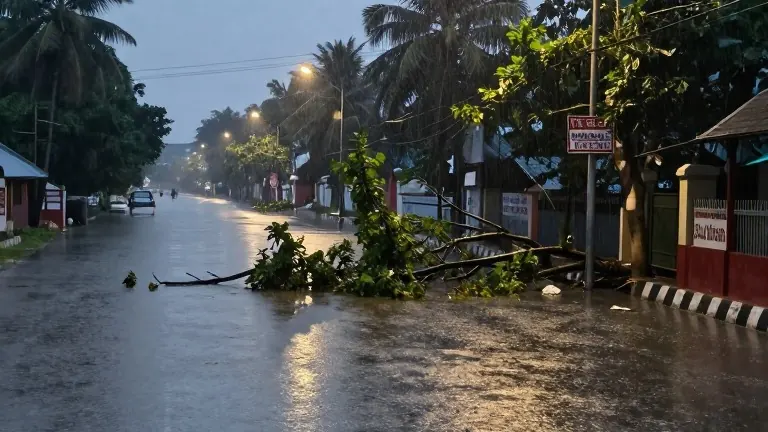
Cyclone Arnab made landfall on India's eastern coast early Wednesday, bringing winds of 135kph and heavy rain to Andhra Pradesh. The storm struck at the third-highest classification level, known as a very severe cyclonic storm. As the system moved inland, meteorologists downgraded its status to severe. Fallen trees blocked major highways, and electricity supplies failed across the affected region.
Officials evacuated at least 180,000 people from Andhra Pradesh and Odisha on Tuesday. These moves occurred ahead of the storm's arrival. More than 12 million residents lived along the path where the cyclone was expected to track. Travel disruptions were widespread. Airlines cancelled flights, and train services stopped running. Several schools closed their doors to students.
Kakinada district in Andhra Pradesh faced immediate threats of flooding. Water spread quickly through low-lying areas. One resident described the situation, stating, "No one knew whose house the water would rush into next or whose home would be submerged." The uncertainty created tension among neighbors as they watched the water levels rise. No casualties had been reported following the initial landfall.
India's Meteorological Department issued warnings about a storm surge. Officials forecast that water levels could rise 1.5 meters above normal tide. This surge was likely to inundate coastal areas where the cyclone crossed on Wednesday morning. The department monitored the situation closely as the storm moved away from the coast.
The weather system also affected Nepal. Authorities told tourists to avoid high-altitude areas on Tuesday. They feared the cyclone could bring torrential rain, snowstorms, and avalanches between Thursday and Saturday. To manage the risk, officials stopped issuing trekking permits for three days. This suspension happened during peak hiking season, a time when about 750 hikers typically receive permits daily. Nepal is still recovering from a glacial mountain collapse in August that killed more than 1,400 people and left at least 5,000 missing.
Sri Lanka took similar precautions. The country closed schools due to concerns about the storm. Its Department of Meteorology warned that Arnab could cause flash floods and landslides. These actions aimed to protect residents from potential secondary impacts of the cyclone system.
Source: Al Jazeera