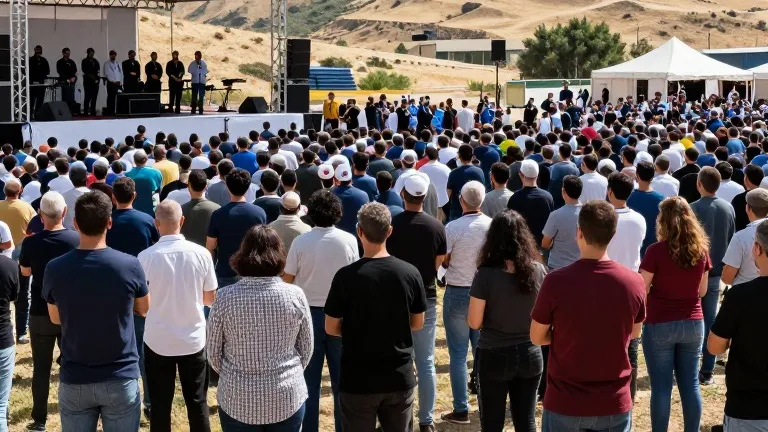
Jordanian Monarch Orders Swift Hunt After Deadly Church Shooting in Karak
Eight people died and forty were injured when gunmen targeted a Greek Orthodox funeral in the Karak region, prompting a nationwide security upgrade and a royal pledge for a firm response.
By Hugo Khalil ·
Life for residents in Jordan has shifted into a state of heightened alert following a violent shooting at a place of worship. The attack, which occurred in broad daylight, resulted in eight deaths and forty injuries, forcing the country to declare three days of national mourning. For working families and commuters, the immediate change is a visible surge in security presence. Shopping malls, foreign embassies, and other public sites across the kingdom now have reinforced protection, a move confirmed by the US embassy in Amman. Authorities are actively searching for the perpetrators, who remain at large.
The incident took place on Friday at a Greek Orthodox church in the Karak governorate. This region is located approximately 120 kilometers, or 75 miles, southwest of the capital, Amman. Witnesses reported that gunmen fired for several minutes while a funeral service was underway. Jordanian officials have classified the event as an act of extremist terrorism. Despite the severity of the loss, no specific group has yet claimed responsibility for the violence.
King Abdullah, a key partner for the United States in the regional fight against violent armed groups, reacted with speed. He traveled to Karak within hours of the shooting to oversee the response. The royal court stated that the monarch instructed security forces to respond firmly and to hunt down those responsible. In a strong statement, the King vowed that the perpetrators would be punished with an iron fist. This direct royal involvement signals a serious escalation in the government’s approach to the crisis.
Prime Minister Jafar Hassan also addressed the nation on social media. He described the attack as a result of a terrorist ideology and blind extremism. The Prime Minister added that the country would not allow society to go down this path. Officials noted that it is too early to determine whether the attackers had ties to known groups inside or outside of Jordan. The investigation continues as police work to establish the precise motives and connections of the gunmen.
The human cost of the attack was captured in the accounts of survivors. Nasser al-Burqan, a lawyer who was at the church, described the chaos to the Reuters news agency. He said one attacker stood about two meters, or 6.5 feet, away and aimed a handgun directly at him before firing. Al-Burqan later received a phone call from his son, who was also at the mass. The son reported that he had been shot in the leg and was receiving hospital treatment. This personal connection to the tragedy underscores the immediate danger faced by those gathered for the service.
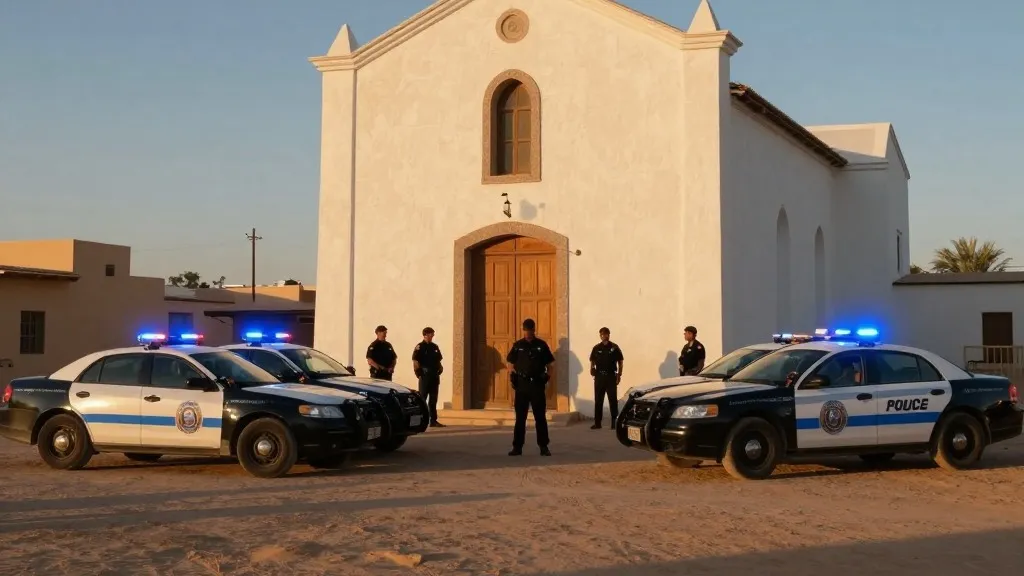
Al-Burqan provided further details about the scene after the gunfire stopped. He looked out a window behind him and saw two assailants. One was masked, while the other was unmasked and carrying a handgun. Video footage released on Saturday showed police patrolling outside the church, indicating a sustained security presence. The visual evidence supports the accounts of a quick and decisive police response following the initial volley of shots.
The emotional impact was felt strongly at the hospitals where the wounded were treated. Tarek Ammarin, whose relative was among the injured, called the event a massacre in every sense of the word. His words reflect the shock felt by families dealing with the aftermath of the shooting. The scene at the medical facilities was one of urgency as staff worked to stabilize the forty individuals who survived the initial attack but required immediate care.
Local leaders have also weighed in on the incident. Bahjat al-Rushda, the mayor of Shihan village in Karak, condemned the attack as wicked. He expressed hope that the country would remain safe, stating that God willing, this country will remain safe. These comments highlight the local community's resilience and their desire to return to normalcy after a disruptive and violent weekend.
Attacks of this nature are rare in Jordan, though authorities in the US-allied kingdom have noted that they have repeatedly foiled plots in recent years. These plots were often driven by violent groups adhering to a strict interpretation of Islam. The Karak region is home to a minority Christian population. Additionally, Jordan contains several biblical sites that draw Christian pilgrims from around the world. This context adds a layer of significance to the target of the attack, as it touches on a demographic that is both culturally and historically significant to the nation.
As the search for the gunmen continues, the focus remains on securing public spaces and identifying the individuals behind the violence. The government's decision to step up security at key locations aims to reassure the public while the investigation is ongoing. The coming days will likely bring more details on the suspects' backgrounds and the extent of their network. For now, the nation is in a period of mourning and vigilance, waiting for justice to be served.
Source: Al Jazeera