Spain's Affordable Midday Meals Face Pressure as Eating Habits Change
A journalist's new book examines the history of Spain's daily set lunch and the economic forces now challenging its place in working life.
By Pavel Bell ·
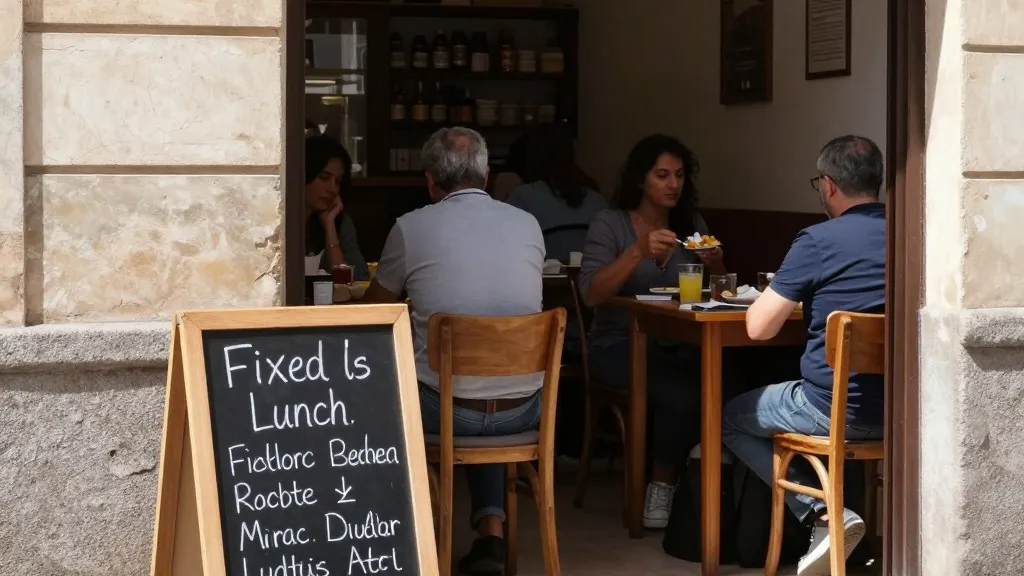
Spanish food journalist Lakshmi Aguirre has released a new book examining the menú del día, the fixed-price midday meal that has been a fixture of Spanish culture for decades. Her work, titled Menú del Día: Everyday Scenes of a First Course, a Second Course and Pudding, traces the origins of the tradition and assesses the pressures currently acting upon it. While the service remains widespread, the specific format is facing significant operational challenges.
The tradition of serving a set lunch at a specific price began in the mid-1960s, originating as a scheme designed by Manuel Fraga, the information and tourism minister under the dictatorship of Francisco Franco. The government of the time intended to demonstrate to foreign visitors that food was abundant following the years of scarcity that followed the Spanish civil war. Regulations at the time specified a fixed price between 50 and 250 pesetas, mandating a specific meal structure and requiring that any accompanying wine be pure, clean, and pleasant Spanish red or white with a minimum alcohol content of 12%.
Despite a declaration by chef Ferran Adrià in 2009 that the menú del día was dead, the tradition has persisted, with approximately 4 million meals served on this model each weekday. However, the current average price of a menu has risen to €14.70. This cost, combined with rising energy and food prices, has made it difficult for small, family-run establishments to continue providing a rotating daily selection of dishes.
As a result, some restaurants have shifted to offering a single dish of the day, while others have incorporated Latin American staples to reflect Spain's changing demographics. Aguirre accepts these modifications, stating that the menu has always mirrored the society that eats it. She also noted that she is unable to recall Fraga's role in the menu's creation, stating, "It says a lot about us Spaniards; we forget very quickly."
Beyond the loss of affordable food, Aguirre identifies a threat to the social function of these restaurants. She describes the menú del día as a vital meeting point for families with limited means and for individuals who live alone. For those with the time to attend, she argues that the true privilege of the meal lies in having the time to enjoy it, rather than simply paying for it.
Source: The Guardian