Campaigning Ends in Brazil as Final Poll Shows Bolsonaro Ahead by 1.3 Points
Sunday's runoff will decide whether Lula wins a fourth term or Flavio Bolsonaro takes office.
By Sergio Morris ·
Brazil's presidential candidates closed their campaigns Saturday ahead of a Sunday runoff, with the final CNT/MDA poll showing Senator Flavio Bolsonaro at 46.3 percent against incumbent President Luiz Inacio Lula da Silva's 45 percent. The margin of error is 2.2 percentage points. A week earlier, the same poll had Bolsonaro at 46.8 percent and Lula at 45.9 percent.
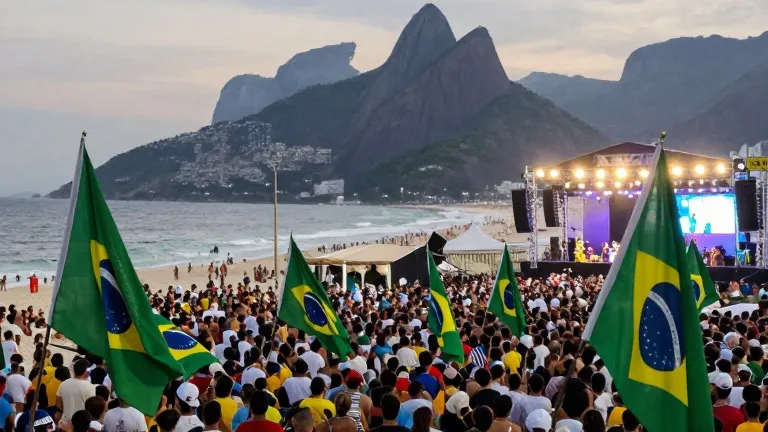
Lula, 80, wore a red hat and spoke to hundreds at Copacabana Beach in Rio de Janeiro, waving a Brazilian flag from a campaign truck. Addressing his rival's ties to US President Donald Trump, Lula said: "The people must choose either someone who kisses the national flag or someone who kisses the American flag." He is seeking a fourth, non-consecutive term.
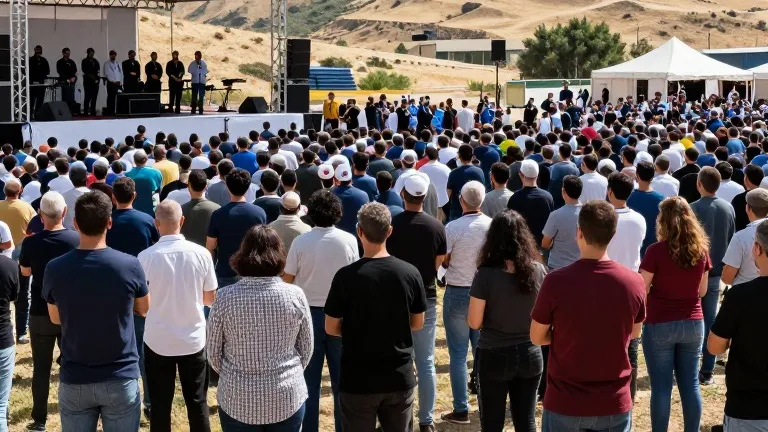
Flavio Bolsonaro, a senator and son of former President Jair Bolsonaro, drew supporters to Minas Gerais, where hundreds of motorcyclists rode in Brazil's yellow national football shirts. Ebert Dorigo, one participant, told AFP the Workers' Party had fostered dependence on government welfare. "The values we uphold are nation and family," Dorigo said.
Flavio Bolsonaro took 47 percent in the first round, ahead of Lula's 45 percent. He has pledged to add hundreds of thousands of prison places and cut government spending. His father, president from 2019 to 2022, is serving a 27-year sentence for attempting a coup after losing the 2022 election to Lula.
The candidates met in a final debate Friday and traded accusations over economic policy and each other's records. Voter sentiment remains divided. "If there were any other candidate, that would be a better option. But we're stuck choosing between the worst, the horrible, and the lesser evil," event organiser Gabriela Ribeiro Viana told AFP.
Brazilian voters head to the polls Sunday to choose the next president.
Campaigning closed at midnight Friday, with rallies Saturday in Rio de Janeiro and Minas Gerais.
Source: Al Jazeera