Early Vote Surge Sets Stage for Ground Game Showdown
With 57 million votes already cast, party chairs emphasize that ground-level mobilization will determine control of Congress in a midterm defined by economic anxiety and strategic redistricting.
By Hugo Khalil ·
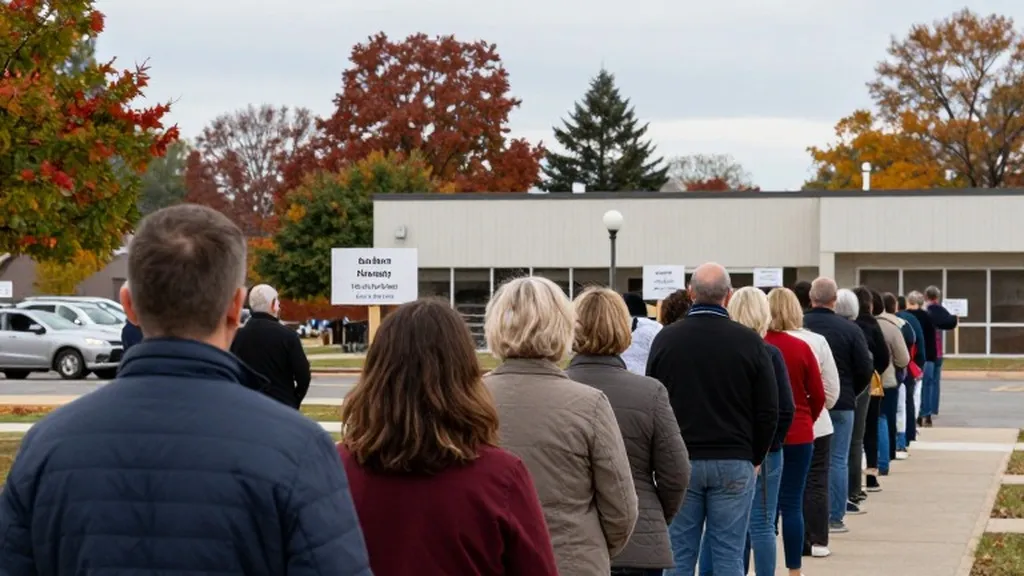
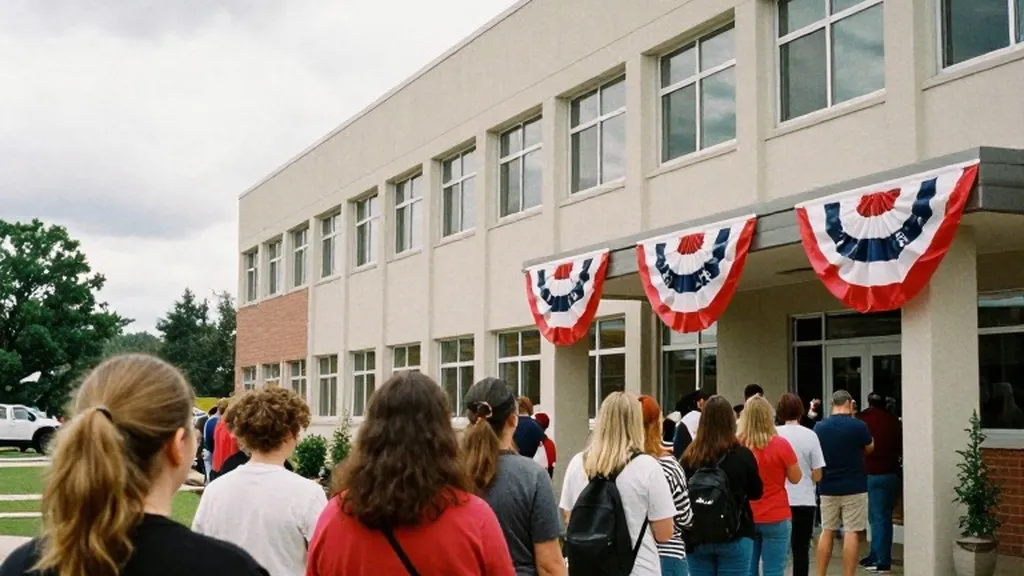
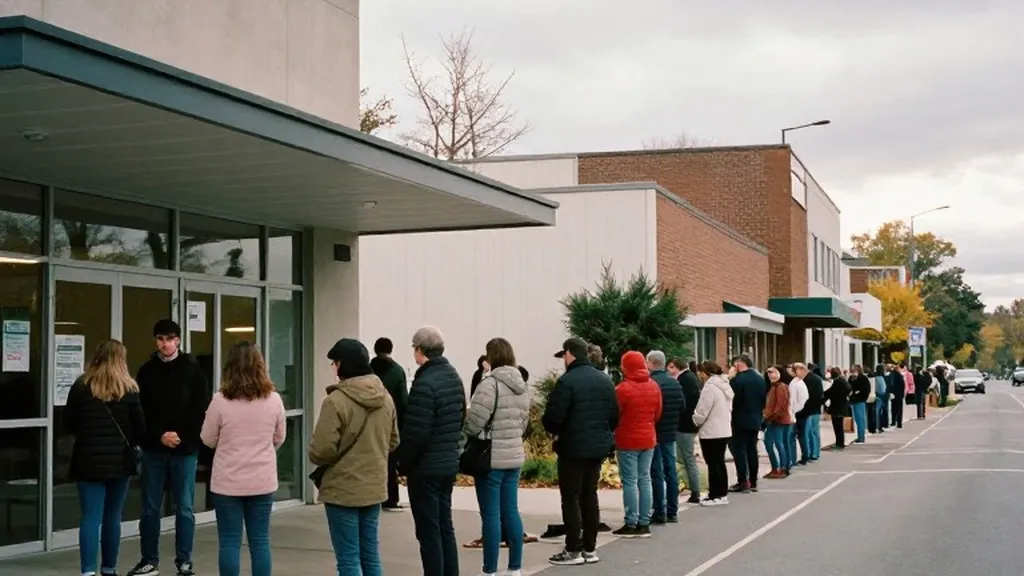
The United States is heading into a decisive midterm election on Tuesday, November 3, 2026, with the outcome poised to determine which party controls Congress for the final two years of President Donald Trump's second term. According to the Associated Press, more than 57 million people had already voted as of Monday, surpassing early vote totals from four years ago in many closely watched states. This surge in early participation reflects a highly engaged electorate that is grappling with high prices and an unpopular war with Iran. The sheer volume of ballots cast before Election Day suggests that the final outcome may hinge less on last-minute persuasion and more on the efficiency of each party's ground operation in getting voters to the polls.
Both political parties have structured their strategies around the critical variable of turnout. RNC Chairman Joe Gruters stated that everything depends on turnout, asserting that if the Republican base shows up in sufficient numbers, they will secure victory. He noted that this focus on mobilization has been the central pillar of their planning. In contrast, Democratic Congressional Campaign Committee Chair Rep. Suzan DelBene framed the contest as a response to public frustration, saying that the American people are angry and want change. Her comments underscore a Democratic strategy that relies on energizing voters who feel the current administration has failed to address their daily economic realities.
The ground game has become the primary battlefield in a series of competitive districts and states. Democrats need a net gain of three House districts to claim a majority, while Republicans can afford to lose no more than two. In the Senate, the stakes are equally precise, with Democrats needing a net gain of four seats to take control. Ballotpedia identifies 46 battleground House districts and 13 competitive Senate races, highlighting the narrow margins that will define the legislative makeup. These numbers indicate that the election is not a broad national landslide but a series of tight, local contests where every vote counts.
Republicans entered the cycle with a significant financial advantage, having outraised and outspent Democratic committees at the committee level. This spending was heavily influenced by Trump-affiliated groups and billionaire Elon Musk. However, the Associated Press analysis of AdImpact data reveals that 88.1 percent of Republican general election TV ad spending went to states and districts that Trump won in 2024. Specifically, more than $850 million was spent in areas where he won by 10 points or more. This strategy suggests an attempt to consolidate the base and protect the president's legacy, even as Democrats argue that their spending is more efficiently targeted at competitive swing districts.
Redistricting has also played a pivotal role in shaping the 2026 landscape. Six states, including California, Florida, Missouri, North Carolina, Tennessee, and Texas, are using new congressional maps following mid-decade redistricting. Ohio is also utilizing a new map. These changes were intended to help the Republican party beat the typical midterm pattern of losing seats. However, political observers note that new districts may not vote as they were drawn, adding a layer of uncertainty to the Republican strategy. The effectiveness of these new maps will be tested as voters head to the polls in these critical states.
The mood among voters is characterized by a mix of economic anxiety and political fatigue. AP-NORC polling indicates that 35 percent of U.S. adults approve of Trump's job performance, while only 25 percent approve of his handling of the economy. About seven in 10 Americans say the country is heading in the wrong direction, with most blaming the president for high prices. This sentiment is echoed by voters on the ground. James Moore, a 57-year-old librarian in Raleigh, North Carolina, expressed his frustration by noting that he is paying more taxes, more for healthcare, and more for everything. His comments reflect the broader Democratic narrative that the cost of living has become the defining issue of the election.
Conversely, some voters remain steadfast in their support for the administration. Mark Barker of Palm Beach Gardens, Florida, stated that he has been following Trump the whole time and believes he is doing an awesome job. This split in public opinion highlights the challenge both parties face in turning out their core supporters while also persuading undecided voters. The Republican party is bracing for the possibility of losing the House while fighting to hold the Senate, a scenario that the Associated Press describes as plausible given that one or two seats could tip either chamber. Democrats, meanwhile, are described as cautiously optimistic, relying on their ground game to deliver a decisive win.
Administrative hurdles have also shaped the election environment. A federal judge temporarily barred the Trump administration from carrying out a plan to prevent noncitizen voting, a move that critics said risked disenfranchising eligible voters. Additionally, a judge ordered the administration to stop demanding that California election officials segregate ballots cast by people on its lists of suspected noncitizens. These legal interventions have added to the complexity of the election, with the U.S. Postal Service adding hours, staff, and special lines to ensure mail ballots are counted on time. The Justice Department's threats to prosecute local election officials have further heightened tensions, leading to fears of interference and intimidation among Democratic strategists.
The implications of the election extend beyond simple party control. If Democrats win even one chamber, investigations and possible impeachment proceedings become likely. House Democratic Leader Hakeem Jeffries has outlined a 100-day agenda focused on the cost of living and oversight, positioning himself as a potential speaker if his party gains the majority. A strong Democratic night would also boost the profiles of potential 2028 candidates such as Gavin Newsom, JB Pritzker, and Pete Buttigieg, while potentially complicating the path of Vice President JD Vance. For Republicans, the challenge is to maintain their grip on the Senate and protect the president's agenda from congressional scrutiny.