Trump's Rally Tour and Fraud Claims Define Midterm Landscape
With approval ratings low and candidates keeping their distance, the President’s active role shapes the narrative of the 2026 midterm elections.
By Sergio Morris ·
President Donald Trump held dozens of rallies leading up to Election Day, concluding his campaign schedule on Sunday in Salina, Kansas. At that final event, the President addressed the crowd with a direct plea, telling supporters, "I really want you to pretend I'm on the ballot." This statement highlighted the central dynamic of the 2026 midterm elections, where the President is not technically running but is exerting significant influence over the outcome. His recent tour included stops in Mississippi, South Carolina, and Texas, locations where Republican candidates faced challenging races against Democrats.
Despite the President's visible presence, many of his own party's candidates have kept a careful distance from him during this cycle. This strategic distancing reflects a broader anxiety among Republican officeholders who view the election as a critical referendum on their party's leadership. The Associated Press describes the atmosphere as one where voters are struggling with high prices and are angry over an unpopular war with Iran. These economic and foreign policy concerns have created a backdrop in which Trump's active campaigning is viewed by some as a necessary boost and by others as a potential liability.
Polling data underscores the challenges facing the President's party. According to AP-NORC polling, only 35 percent of U.S. adults approve of Trump's job performance, while just 25 percent approve of his handling of the economy. Approximately seven in ten Americans say the country is heading in the wrong direction, with most blaming the President for high prices. These numbers have fueled the narrative that the midterm election is a direct test of the administration's second term. Democrats have leveraged these statistics to frame the race as a choice between change and the status quo, a message that resonates with voters concerned about the cost of living.
The President has continued to make false claims about voting fraud throughout the election cycle, asserting that noncitizens vote in large numbers. These claims have led his administration to file lawsuits in Alaska and California, actions that Democrats fear could lead to interference and intimidation. The Justice Department has threatened to prosecute local election officials, adding to the tension surrounding the administration's role in the process. A federal judge temporarily barred the Trump administration from carrying out a plan to prevent noncitizen voting, while another judge ordered the administration to stop demanding that California officials segregate ballots cast by people on lists of suspected noncitizens. These legal maneuvers have kept the focus on election integrity even as polls remained open.
The financial aspects of the election also highlight the President's influence. The 2026 elections are likely to be the most expensive in history, with Republican committees outraising and outspending their Democratic counterparts. This advantage was bolstered by Trump-affiliated groups and Elon Musk. Analysis of AdImpact data by the Associated Press shows that 88.1 percent of Republican general election TV ad spending went to states and districts that Trump won in 2024. This targeted spending strategy suggests that the President's approval ratings and name recognition are being leveraged to consolidate support in areas where he has a strong base, even as the party faces potential losses in more competitive districts.
For Democrats, the election presents an opportunity to challenge the Republican hold on Congress. House Democratic Leader Hakeem Jeffries has outlined a 100-day agenda focused on the cost of living and oversight, which he would implement if Democrats win the House. A victory would make him the first Black speaker of the House and would likely lead to increased investigations and possible impeachment proceedings. Democrats are cautiously optimistic, noting that the American people are angry and want change. This sentiment is echoed by voters like James Moore, a librarian in Raleigh, North Carolina, who cited rising taxes and healthcare costs as primary reasons for his vote.
The Republican side is bracing for potential losses in the House while fighting to hold the Senate. RNC Chairman Joe Gruters emphasized the importance of turnout, stating, "Everything depends on turnout. If we turn out our voters, we win, and that's what we've been planning for." The party has tried to beat the historical midterm pattern, where a president's party almost always loses seats, by utilizing new redistricting maps in states like Florida and California. However, analysts note that these new districts may not vote as drawn, adding uncertainty to the outcome. The balance of power in both chambers could hinge on just one or two seats, making every vote critical.
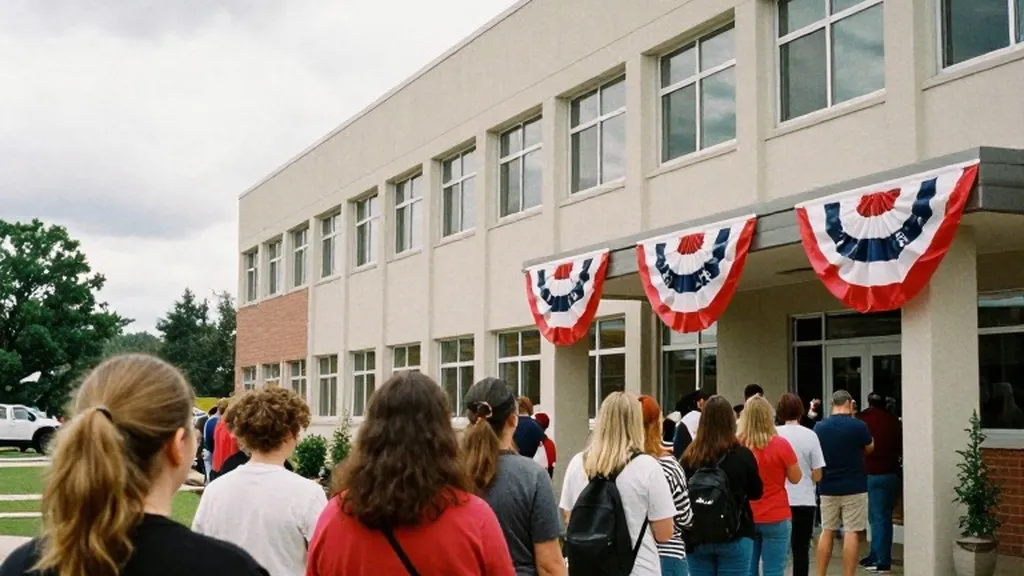
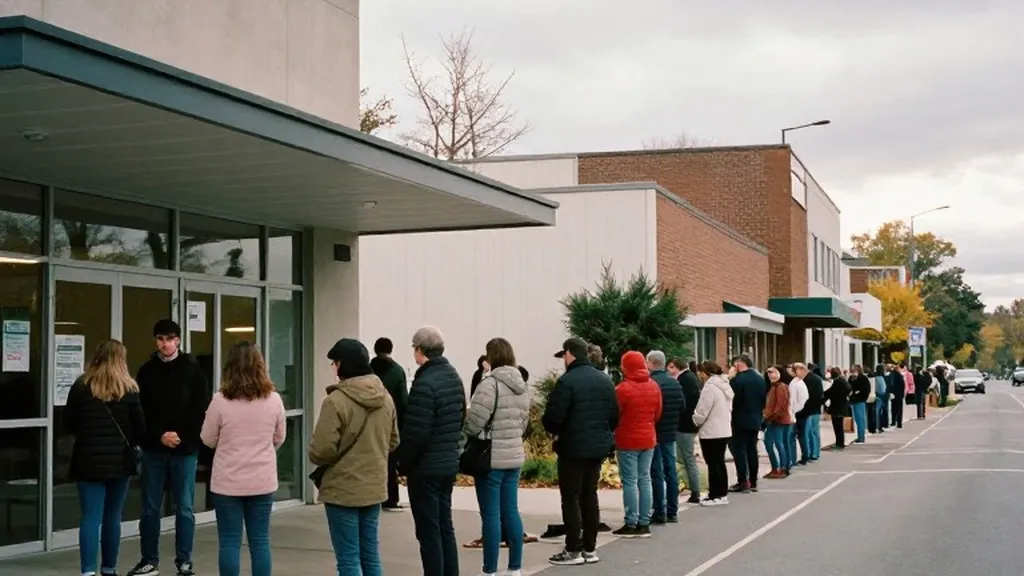
Voters across the country are casting their ballots in a high-stakes contest that determines who will control Congress for the final two years of Trump's second term. More than 57 million people had already voted as of Monday, surpassing early vote totals from four years ago in many closely watched states. The U.S. Postal Service added hours, staff, and special lines to ensure mail ballots are counted on time, addressing logistical concerns that have plagued previous elections. As polls open in various states, the focus remains on how the President's active role and the persistent fraud claims will influence voter behavior in the final hours of the election.
The outcome of this election will have significant implications for the future of the administration and the potential 2028 presidential race. A strong Democratic night could boost the profiles of potential candidates such as Gavin Newsom, JB Pritzker, and Pete Buttigieg, while complicating the path for Vice President JD Vance. Conversely, a Republican hold on the Senate would provide the administration with a more favorable legislative environment for its remaining term. The stakes extend beyond politics, with Wall Street watching for signals on AI spending and debt ceiling negotiations that could impact investor confidence. The election serves as a critical checkpoint for the nation's direction under the current administration.