Gas Prices Top $4: The Cost of an Eight-Month Iran War
Voters in swing states are linking soaring fuel costs to the conflict, forcing Republicans to defend a strategy that Trump promised would last only weeks.
By Sergio Morris ·
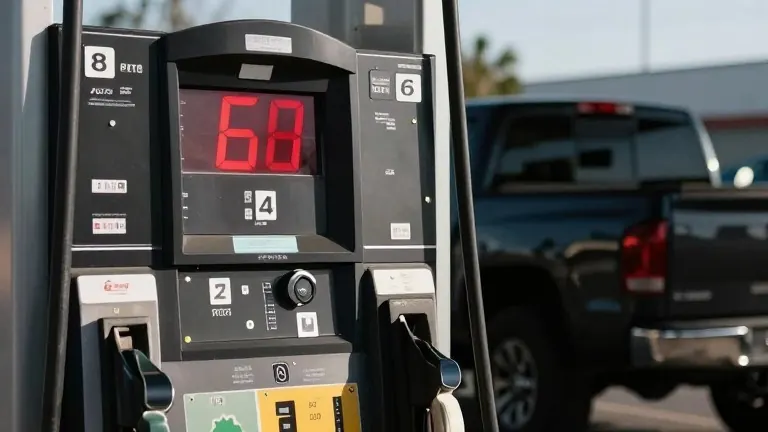
Noor Dubow, a 44-year-old dispatcher for a trucking logistics firm in Columbus, Ohio, watches fuel prices surge from his office. He typically votes Republican for economic reasons, but this cycle he shifted his support toward Democrats. His frustration centers on the administration’s decision to launch a war against Iran.
"Where are the Republicans in Congress?" Dubow asked. "Why aren't the Republicans holding Trump accountable?"
President Donald Trump has frequently referred to the conflict as a "little detour." He initially predicted the war would last a matter of weeks. It has now continued for nearly eight months. The conflict has become a major liability for the Republican Party ahead of the November 3 midterm elections. Rising gasoline prices are driving up costs across the economy, creating pressure on candidates trying to retain control of Congress.
An AP-NORC poll published last week found that voters from both parties want the next Congress to focus on affordability and end the war in Iran. The conflict has expanded beyond the initial front lines. Iran-backed Houthi rebels attacked Saudi Arabia's oil infrastructure and airports. A Saudi-led coalition responded with strikes on Houthi-held territory in Yemen. Over the weekend, the State Department reduced staffing at four U.S. embassies in the Middle East after intelligence indicated Iran was targeting American personnel.
Diesel prices in the U.S. remain near all-time highs. This creates difficulties for Republicans in conservative states like Iowa, Kansas, Ohio, and Texas, where races are competitive. Trump has downplayed the economic impact. At a rally in Michigan, he argued that the cost is a small price to pay to remove a nuclear threat from what he called "maniacs."
"Somebody said, 'If you had it to do again..,'" Trump told the crowd. "I said, 'Are you kidding?' I thought gas would be double or triple. And it’s a small price to pay for taking a nuclear weapon away from maniacs."
Christopher Borick, director of the Lehigh University Opinion Observatory, said Trump’s messaging resonates with a shrinking portion of the electorate. For voters unhappy with the conflict's direction, the president's claims are not changing their negative outlook. Internal campaign polling suggests that Trump's argument that the affordability crisis is a "hoax" or "scam" has not resonated with American voters.
Oil prices peaked in May, dropped in June, and surged again in September. The national average has hovered above $4 per gallon since mid-June. In June, after an interim ceasefire agreement with Tehran, White House officials appeared more confident. The deal collapsed within weeks. By the time of the Labor Day holiday, internal polls showed voters were connecting the war to higher grocery and travel costs.
Clay Coey, a 59-year-old auctioneer from DeWitt, Michigan, supports the war but feels the strain at the pump. "Do I like it? No, I drive this old beast," Coey said of his 2010 Chrysler Sebring. "However, there does come a point in time where you have to sit here and say, what is worth the cost?"
Sean O'Brien, a 21-year-old student at Auburn University in Alabama, attended the Conservative Political Action Conference earlier this year. He now says he is "very disillusioned" by the Iran decision, which he views as a betrayal of the "America First" pledge to avoid foreign wars. "At the moment, I expect to vote Democratic," O'Brien said.
Source: ABC News