Pakistan Completes Ratification of Mecca Defence Pact With Saudi Arabia and Turkey
Islamabad has formally approved the tripartite security agreement as the kingdom faces renewed Houthi strikes and regional tensions escalate.
By Sergio Morris ·
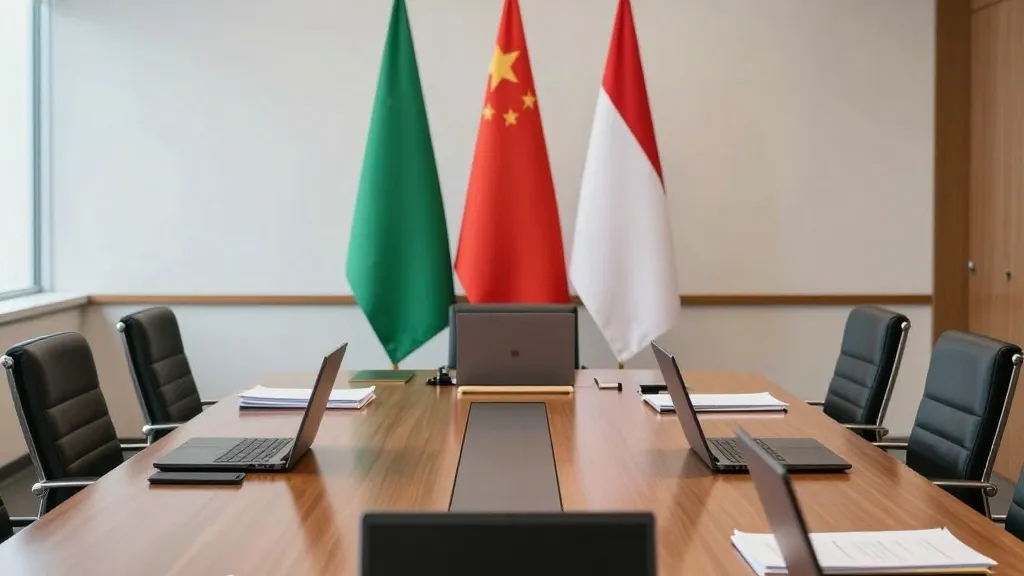
Three nations have moved a step closer to a unified front for regional security after the latest ratification of their mutual defense accord.
Pakistan announced on Friday that it has completed the domestic procedures required to ratify the joint defence pact signed with Turkey and Saudi Arabia. This move finalizes Islamabad's commitment to the Mecca Joint Defence Agreement, which was originally signed on 7 August. While the Pakistani and Saudi sides have both concluded their approval processes, Turkey is still navigating its internal legislative steps. Consequently, the agreement has not yet been fully ratified by all three signatories. Foreign Office spokesperson Sajjad Haider Khan stated that discussions regarding the operationalization of the pact continue among the three parties.
The accord establishes a framework for collective defense in the event of an external armed attack on any of the three member states. The specific nature and level of assistance provided by allies are to be determined based on the circumstances of the threat. Islamabad has characterized the arrangement as strictly defensive and aligned with the principles of the UN Charter. The signing ceremony in Mecca brought together Turkish President Recep Tayyip Erdogan, Pakistani Prime Minister Shehbaz Sharif, and Saudi Crown Prince Mohammed bin Salman. Since that initial signing, the strategic partnership has gained momentum, particularly following a meeting of the three nations' Strategic Political and Defence Committee on 5 October.
During that recent committee meeting, leaders called for the implementation of collective defence commitments. They emphasized the need for military forces and capabilities to be deployed rapidly in Saudi Arabia if required, subject to the domestic laws of each participating country. This push for readiness comes against a backdrop of heightened security concerns in the region. Saudi Arabia's Civil Defence issued warnings this week regarding potential dangers in parts of the kingdom, specifically in the southwestern areas of Abha and Khamis Mushait. Although authorities later indicated that the immediate danger had passed, they did not specify the exact nature of the threat. Residents were advised to follow safety instructions and avoid gathering or filming in the affected zones, according to reports from the Anadolu Agency.
The timing of these alerts coincided with a series of Houthi missile and drone attacks on Saudi soil. Reports from Reuters on 21 October indicated that Riyadh's allies were primarily offering defensive support as the kingdom worked to protect its critical infrastructure from further strikes. The Houthi group has renewed its pressure on the kingdom, creating a sense of urgency for the new allies to solidify their cooperative mechanisms. The ratification by Pakistan is viewed as a significant signal of commitment to the Saudi side during this period of vulnerability. It demonstrates that the agreement is moving from a diplomatic concept to an actionable security framework, even as the Turkish approval process remains pending.
Broader regional dynamics are also influencing the pace of these developments. The Israeli military announced large-scale exercises scheduled for Sunday and Monday in the northern and central parts of the country. These drills will involve the air force and units from the Northern and Central Commands. The scenarios being rehearsed include surprise air and land attacks as well as potential infiltrations. The military stated that the purpose of these exercises is to test readiness to defend against attacks on multiple fronts and to prepare for any potential escalation along Israel's borders. This military activity adds another layer of complexity to the regional security environment that the three-nation pact aims to address.
Amidst these military preparations, Washington and Tel Aviv are reportedly considering renewed military action against Iran. President Trump stated on Friday that the United States might carry out another military operation against Iran as the conflict approaches its eighth month. A report published this week by The Business Times, citing US officials, suggested that American and Israeli forces have drawn up plans for fresh strikes following the US midterm elections on 3 November. Potential targets for these operations include Iranian energy infrastructure, nuclear facilities, and missile and drone capabilities. The interplay between these various military and diplomatic efforts highlights the high stakes involved in the current regional security landscape.
For working families and observers of civil rights and public health, the stability of the Middle East often has ripple effects on global supply chains and energy markets. The ratification of this defence pact is a key development in that broader context. It represents a formalized commitment to mutual protection that could influence the trajectory of ongoing conflicts. As the three nations continue to discuss the operational details of the agreement, the focus remains on how quickly and effectively they can respond to threats. The coming weeks will be critical as Turkey completes its ratification and as the regional powers navigate the complex web of military exercises and diplomatic negotiations.
The story of this pact is not just about military alliances but also about the pursuit of stability in a volatile region. The involvement of three major powers signals a coordinated approach to security that goes beyond bilateral relationships. As the Houthi attacks continue to test Saudi Arabia's defenses, the promise of rapid deployment under the new agreement becomes increasingly relevant. The people of these nations are watching to see if this pact will serve as a stabilizing force or if it will be drawn into the broader conflicts affecting the region. The next steps in the operationalization of the Mecca Joint Defence Agreement will be closely monitored by analysts and citizens alike.
In the end, the ratification by Pakistan marks a significant milestone in the formation of this tripartite alliance. It brings the three nations one step closer to a fully operationalized defense mechanism. While the Turkish process is ongoing, the commitment from Islamabad and Riyadh is now legally binding. This development occurs at a time when the region faces multiple simultaneous threats and opportunities for de-escalation. The balance of power in the Middle East may well be shaped by how these three nations utilize their new agreement in the months ahead.
Source: Middle East Eye