Gillie and Marc Schattner Monetize Civic Space with Bronze Installations
The husband-and-wife team’s recent projects include memorials for white rhinos and statues of women, positioning their work as a commercial counterpoint to traditional public monuments.
By Hugo Khalil ·
Gillie and Marc Schattner have established a collaborative art practice that functions as a shared economic and creative enterprise. The couple operates out of a joint studio where painting, sculpture, and advocacy are integrated into a single workflow. Their work has been installed in more than 250 cities, creating a global footprint that extends beyond the traditional gallery model.
The financial and institutional scale of their output is substantial. Their bronze works command a place in civic plazas and parks, where they serve as both decorative elements and conservation tools. The durability of the material, bronze, offers a long-term value proposition compared to painted canvases, allowing the sculptures to remain in public view for centuries.
The Schattners met in Hong Kong in 1990 during a photo shoot. They married seven days later near the Himalayas. This early decision to formalize their partnership has underpinned three decades of joint production. Their primary characters, Rabbitwoman and Dogman, act as brand ambassadors, appearing in paintings and sculptures across their portfolio.
Gillie Schattner was born in London to a Dutch mother and an Indian father. She spent her childhood in Zambia, where she observed wildlife and the effects of poaching. Marc Schattner grew up in Australia. His Jewish father was the sole survivor of a 20-person family affected by the Holocaust. These personal histories inform the themes of vulnerability and extinction that drive the market appeal of their work.
The couple’s bronze sculptures challenge the traditional economics of public monuments. Historically, civic bronze was reserved for rulers and generals. The Schattners redirect this medium toward endangered species and women. This shift alters the perceived value of the space, inviting public interaction and touch, which traditional pedestals often forbid.
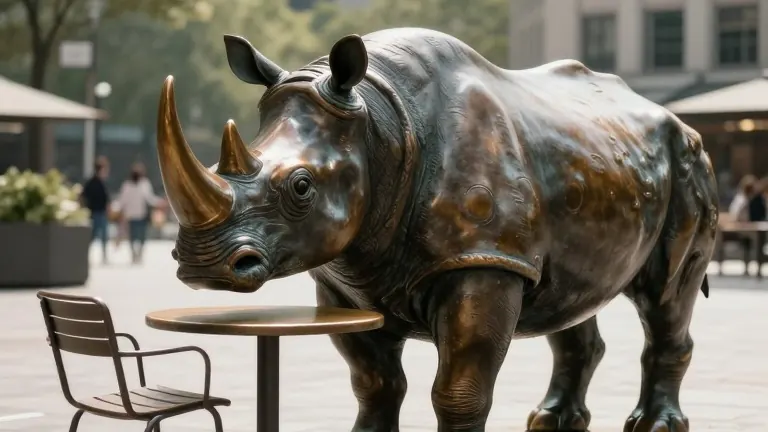
A key project illustrating this model is The Last Three, completed in 2018. This monumental sculpture depicted Sudan, Najin, and Fatu, the last three northern white rhinos. The New York installation opened days before Sudan, the last male, died. The work transformed a conservation campaign into a permanent memorial, anchoring the species’ absence in a physical object.
The Statues for Equality initiative further demonstrates their focus on public representation. The series features larger-than-life bronzes of women such as Jane Goodall, Oprah Winfrey, Janet Mock, Gabby Douglas, and Tererai Trent. The project was conceived to address the lack of women in New York’s commemorative spaces. By using bronze, the artists assign the same material value to these figures as is typically given to male subjects.
The paintings introduce a different visual economy. Saturated colors and graphic contours place the work in conversation with Pop art and street art. Recurring objects like bicycles and coffee cups serve as private emblems. This repetition creates a recognizable visual language that reinforces the brand identity of the couple’s practice.
The hybrid figures in their work draw on ancient Egyptian traditions where animal heads conveyed specific powers. The Schattners adapt this grammar to represent partnership. A rabbit and a dog, usually viewed as prey and predator, are depicted as companions. This reversal replaces the traditional narrative of survival with one of alliance, offering a distinct narrative for public consumption.
Their sculptures often include empty seats and open tables. These features invite strangers to pause and interact with the art. The rhino sculptures raise questions about permanence, while the elephant pieces carry the weight of conservation. The work remains tactile and approachable, making the responsibilities of devotion and visibility physically accessible to the public.
Source: amNY
More Business · Bad Service · Report a business · Got a Story?