Three Tankers Hit by Mines in Strait of Hormuz as Qatari Mediators Return to Tehran
Iranian authorities report explosions on three oil carriers, while diplomats attempt to broker a ceasefire amid renewed diplomatic activity.
By Pavel Bell ·
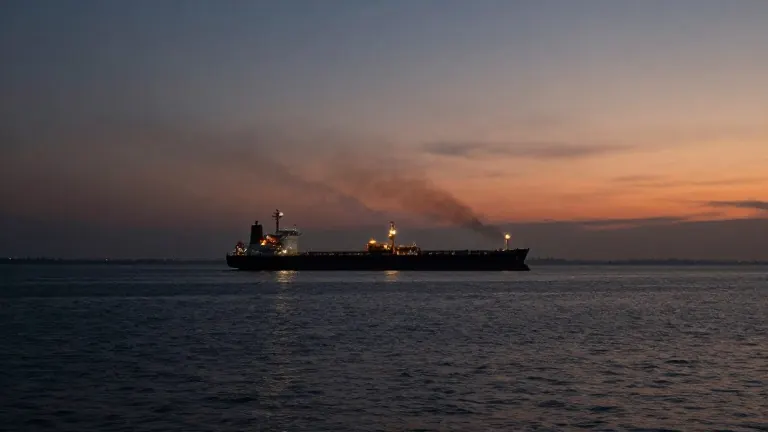
The Strait of Hormuz, a critical chokepoint for global energy, experienced a sharp escalation in conflict on Friday. Iran’s Revolutionary Guard announced that three oil tankers struck naval mines and caught fire while transiting the waterway. One of the vessels was a supertanker carrying more than two million barrels of oil. The incident marks the third time this week that a tanker has been damaged in the strait.
The situation in the strait has deteriorated since the United States and Israel launched a war on February 28. Tehran has asserted control over much of the waterway since that date. Iranian officials warned that vessels passing without authorization would face destruction. The Revolutionary Guard stated that the three ships struck mines after using unauthorized routes. They claimed the vessels had turned off their navigation systems and ignored radio warnings. The U.S. military disputes these claims, stating that its forces have cleared all internationally recognized transit routes of sea mines.
Oman’s Maritime Security Center reported evacuating 25 crew members from a Panama-flagged tanker. The vessel caught fire 1.6 nautical miles off the coast of Musandam Governorate. It remains unclear if this specific incident is related to the three tankers identified by Iranian authorities. The Associated Press could not independently verify the Iranian claims regarding the vessels or their crews.
In parallel developments, Saudi Arabia announced it intercepted a drone near Mecca, Islam’s holiest city. The Saudi-led coalition stated that Maj. Gen. Turki al-Malki confirmed the drone was destroyed in the region surrounding the city. Yemen’s Houthi rebels, backed by Iran, denied targeting Mecca. Their spokesperson, Yahya Saree, said in a statement that their military operations focus on Saudi oil facilities and military bases. The Houthis have previously denied targeting Mecca and Medina despite Saudi reports of intercepting projectiles headed for both locations.
The war in Yemen has displaced over 281,000 people between August 1 and October 25, according to the United Nations Office for the Coordination of Humanitarian Affairs, known as OCHA. Most civilians fled fighting in Taiz and along the West Coast, where clashes have intensified. OCHA documented 263 civilian casualties as of October 27, including 67 deaths. Children account for 97 of these casualties, representing about half of the fatalities. The agency noted that a new surge of displacement from Lahj province in mid-October indicates the crisis is spreading rather than stabilizing.
Diplomatic efforts to end the war with the U.S. and Israel continued on Friday. Qatari mediators returned to Tehran for talks with Iranian officials. The delegation was headed by the Qatari foreign minister and a senior adviser to the prime minister. This visit follows a letter sent by U.S. Vice President JD Vance to Maj. Gen. Mohsen Rezaei, secretary of Iran’s Supreme National Security Council. Tehran acknowledged receiving the letter on Thursday but stated it had not yet responded. President Donald Trump suggested the letter concerned humanitarian aid rather than peace negotiations.
Diplomats reported that U.S. officials have advised Middle East countries and regional allies to prepare for potential renewed military action against Iran. This advice comes after next week’s midterm elections in the United States. In the West Bank, Israeli forces demolished two homes in Hebron belonging to Palestinian gunmen who killed two Israeli soldiers last week. The attack occurred at Judea Junction. Israel ordered residents to evacuate the neighborhood and closed roads into and out of the city. The U.N. humanitarian office reported that more than 3,000 people have been displaced by the operation.
U.N. human rights chief Volker Türk warned that the operation raised concerns about disproportionate use of force. He stated that senior Israeli officials indicated the measures were punitive and designed to instill fear. Türk called for displaced residents to be allowed home and described collective punishment as a grave violation of international law. Israel said troops would continue to operate proactively throughout the West Bank to thwart terrorism and protect residents.
Source: The Aegis