Voters Cite Cost of Living as Top Issue in 2026 Midterms
AP-NORC polling shows economic anxiety driving turnout, with specific concerns about tariffs and health care costs shaping the race for Congress.
By Pavel Bell ·
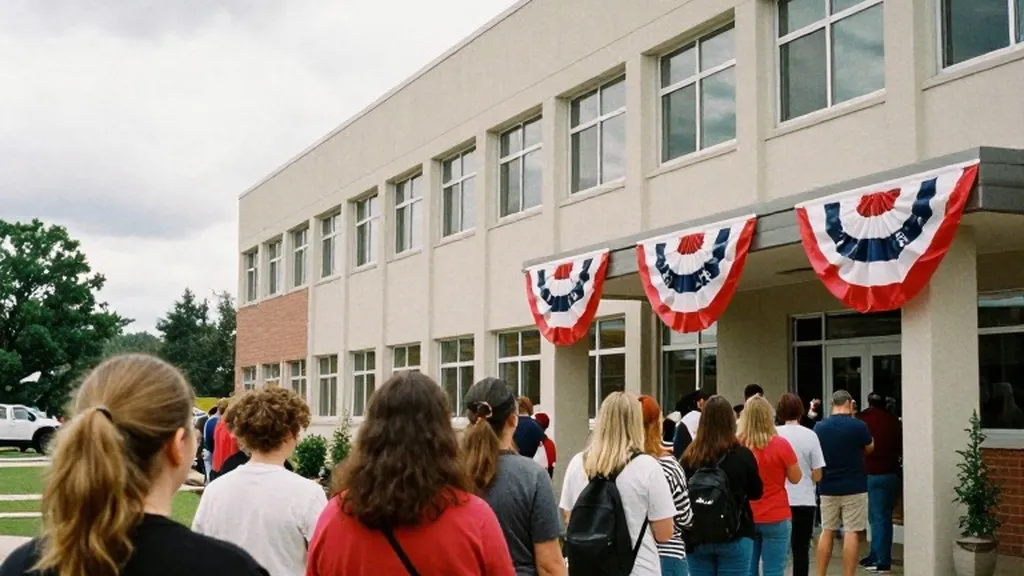
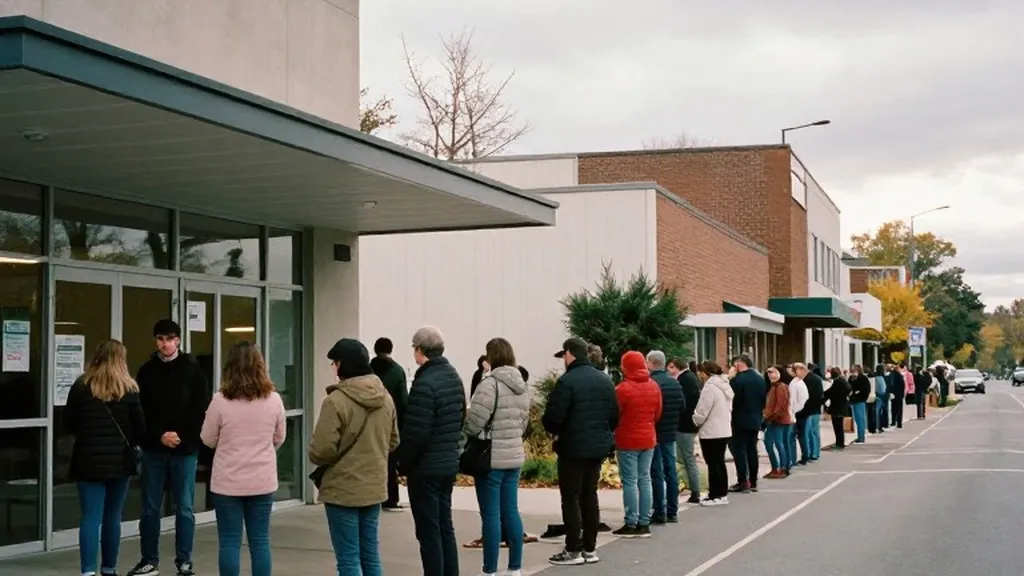
Voters across the United States are casting their ballots on Election Day with the cost of living as their primary concern. According to an Associated Press and NORC survey conducted this week, approximately 70 percent of U.S. adults believe the country is heading in the wrong direction. The poll indicates that most respondents blame President Donald Trump for high prices, with only 25 percent approving of his handling of the economy. This economic dissatisfaction stands in contrast to the 35 percent of adults who approve of his overall job performance. The results suggest that financial pressure is a central factor in the midterm elections, which will determine the balance of power in Congress for the final two years of the current administration.
The Associated Press describes this election as a referendum on the president's second term, noting that voters are struggling with high prices and are angry over an unpopular war with Iran. In Raleigh, North Carolina, James Moore, a 57-year-old librarian, expressed these frustrations directly. He stated that he is paying more taxes, more for his healthcare, and more for everything. His comments reflect a broader sentiment among Democratic-leaning voters who see the current economic conditions as a failure of leadership. In contrast, Mark Barker of Palm Beach Gardens, Florida, offered a different perspective, saying he has been following Trump the whole time and believes the president is doing an awesome job. These differing views highlight the polarized nature of the electorate as polls remain open across the nation.
The economic strain is particularly visible in states where tariffs have impacted local industries. In Maine, a state that has become competitive due to these economic pressures, voters are weighing the effects of trade policies on their daily lives. The Associated Press notes that economic strain and tariffs have made the state a key battleground. This is not limited to coastal areas; in Kansas, a reliably Republican state, the economic climate has become central to the fight for Senate control. The state’s economy is feeling the weight of national policy decisions, and voters are using their ballots to signal their approval or disapproval of these outcomes. The stakes are high, with one or two Senate seats potentially tipping the balance of power.
Democrats are cautiously optimistic as they seek to regain control of at least one chamber of Congress. To achieve a majority in the Senate, Democrats need a net gain of four seats, a challenge given that Republicans hold 53 seats. In the House, Democrats need a net gain of three districts to secure a majority, a goal that is within reach as 46 battleground districts are contested. If Democrats win either chamber, investigations and possible impeachment proceedings become likely. House Democratic Leader Hakeem Jeffries has outlined a 100-day agenda focused on the cost of living and oversight of the administration. A strong performance for Democrats would also boost potential 2028 candidates, including Gavin Newsom, JB Pritzker, and Pete Buttigieg.
Republicans are bracing for the possibility of losing the House while fighting to hold the Senate. RNC Chairman Joe Gruters emphasized that everything depends on turnout, stating that if they turn out their voters, they win. The party has relied heavily on redistricting to maintain its advantage, with new congressional maps in effect for states including California, Florida, Missouri, North Carolina, Tennessee, Texas, and Ohio. However, the effectiveness of these maps is being tested as voters respond to economic conditions. In Florida and elsewhere, new districts may not vote as originally drawn, adding uncertainty to the Republican strategy. The party is also dealing with internal dynamics, as many candidates have kept their distance from the president during his recent rally circuit.
The financial resources behind the campaigns are shaping the narrative of the election. The 2026 elections are likely to be the most expensive in history, with Republican committees outraising and outspending their Democratic counterparts. This spending advantage is driven by Trump-affiliated groups and contributions from Elon Musk. However, at the candidate level, Democrats have managed to outraise their opponents. An analysis of AdImpact data by the Associated Press shows that 88.1 percent of Republican general election TV ad spending went to states and districts that Trump won in 2024. This targeted spending includes more than $850 million in areas where he won by 10 points or more, suggesting a strategy focused on protecting strongholds while competing in swing areas.
Early voting numbers indicate high engagement, with more than 57 million people having already cast their ballots as of Monday. This figure surpasses the early vote from four years ago in many closely watched states. The high turnout suggests that voters are motivated to make their voices heard on economic and foreign policy issues. The U.S. Postal Service has added hours, staff, and special lines to ensure that mail ballots are counted on time, reflecting the logistical challenges of a high-participation election. Critics have also raised concerns about the administration’s efforts to prevent noncitizen voting, which a federal judge temporarily barred on Monday. These legal battles are adding another layer of complexity to the election administration.
Wall Street is watching the results closely, as the outcome of the midterms could impact investor confidence. Reuters notes that the results could add to concerns about AI spending and debt ceiling negotiations. The composition of the new Congress will influence fiscal policy, with the potential for increased oversight or legislative gridlock depending on which party holds control. The economic stakes are not just political but also financial, with markets reacting to signals about the direction of the country’s economic policy. The election is thus a pivotal moment for both the political landscape and the broader economy.